
Red Light Therapy Mask: The Ultimate Guide to Radiant, Youthful Skin
Red Light Therapy Masks: Clinical Science, Benefits & Device Selection Guide
Red light therapy masks utilize targeted wavelengths (630–850 nm) to penetrate dermal layers and stimulate cellular mitochondria, boosting collagen production and accelerating tissue repair[1]. Clinical-grade devices like the CANTOPLED Rejuvalight Pro and CANTOPLED Glow deliver optimized irradiance (20–50 mW/cm²) to smooth fine lines and clear acne without downtime[2]. Always prioritize medical-grade silicone, narrow bandwidth LEDs, and multi-market safety certifications (FDA, CE, ISO 13485)[3].
Table of Contents
- 1. What Is a Red Light Therapy Mask & How It Works
- 2. Key Benefits Backed by Clinical Data
- 3. What to Look for in a Professional Light Mask
- 4. Quality Matrix: Medical-Grade vs. Low-Grade Masks
- 5. Step-by-Step Usage Guide for Optimal Results
- 6. Partner With CANTOPLED Technology for Custom Devices
- 7. References & External Links
1. What Is a Red Light Therapy Mask & How It Works
A red light therapy mask is a wearable photonic skincare device that delivers specific narrow-spectrum light into dermal tissues. Unlike topical formulations operating on the surface, light energy targets the cellular mitochondria, driving ATP synthesis and accelerating natural collagen and elastin production[1].
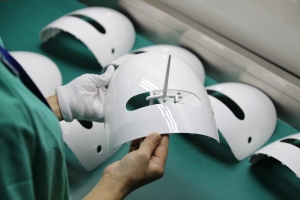

Advanced arrays, such as the CANTOPLED Therapy Mask, combine red light (633 nm), near-infrared (830 nm), and targeted blue light (465 nm) to trigger key biological pathways:
- Collagen & Elastin Synthesis: Rebuilds structural proteins to restore dermal volume.
- Enhanced Microcirculation: Increases localized oxygenation and nutrient delivery to depleted skin cells.
- Inflammation Control & Repair: Calms erythema and accelerates post-treatment skin recovery.
2. Key Benefits Backed by Clinical Data
- Smooths Fine Lines & Wrinkles: Clinical testing on the CANTOPLED Rejuvalight Pro demonstrated an 87% reduction in wrinkle severity after consistent treatment over 8 weeks[2].
- Fades Hyperpigmentation & Sun Damage: Target optical exposure evens tone, with clinical trials showing 91% of subjects exhibiting improved clarity after 9 sessions.
- Clears Acne & Controls Cutibacterium: Combining 415–465 nm blue light with 633 nm red light neutralizes acne-causing bacteria while reducing inflammatory lesions[4].
- Non-Invasive & Zero Downtime: Emits zero thermal damage or harmful UV radiation, making medical-grade masks safe for all Fitzpatrick skin types.
3. What to Look for in a Professional Light Mask
1. Wavelength Accuracy & LED Chip Quality
- Red Light (630–660 nm): Primary bandwidth for dermal collagen activation.
- Near-Infrared (830–850 nm): Penetrates deep subcutaneous tissue for long-term cellular repair.
- Blue Light (415–465 nm): Surface anti-bacterial targeted treatment.
2. Irradiance (Power Output Density)
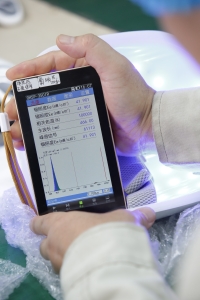
Higher irradiance (mW/cm²) delivers effective photon dosages in shorter session windows. While standard devices deliver 20 mW/cm² (CANTOPLED Therapy), high-output models like the CANTOPLED Glow deliver up to 50 mW/cm² for rapid clinical-grade sessions.
Looking to source custom-engineered LED masks for your brand? Visit our
Custom Light Therapy Manufacturing Page.
4. Quality Matrix: Medical-Grade vs. Low-Grade Masks
Evaluate critical manufacturing standards when selecting a high-performance red light mask:
| Specification Metric | Medical-Grade Silicone Mask (CANTOPLED Standard) | Low-Grade Consumer Device |
|---|---|---|
| Material & Comfort | Flexible 3D liquid silicone (270g lightweight fit) | Rigid plastic shell with poor facial coverage |
| Optical Density / Output | High irradiance (20–50 mW/cm²) constant output | Unverified weak density (<10 mW/cm²) |
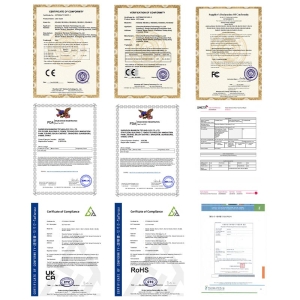
| Certification & Safety | FDA Cleared, CE, UKCA, FCC, RoHS, ISO 13485[3] | Non-certified electronics standards |
5. Step-by-Step Usage Guide for Optimal Results
- Cleanse Thoroughly: Wash face to remove barrier oils, makeup, and sunscreen before session start.
- Secure Device & Eye Protection: Fit adjustable silicone straps and wear integrated eye shields.
- Set Program Parameters: Select targeted wavelengths and duration (typically 10–20 minutes, or 3-minute rapid cycles on CANTOPLED Rejuvalight Pro).
- Post-Treatment Hydration: Apply hydrating serums or moisturizers immediately following session.
- Sanitize Device: Wipe silicone surface with non-alcoholic medical disinfectant wipes.
6. Partner With CANTOPLED Technology for Custom Devices
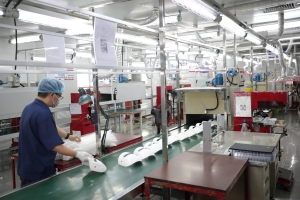
Looking to launch or scale high-performance red light therapy devices for your brand? CANTOPLED Technology provides comprehensive OEM/ODM engineering and flexible manufacturing from our Shenzhen facility:
- Full FDA-Cleared, CE, Health Canada, UKCA & ISO 13485 Medical System Compliance[3].
- Flexible trial batch support & private label OEM customization (MOQ: 500 units).
- Direct access to R&D optical engineers for 3D mold tooling and spectrum tuning.
Looking to Source Red Light Therapy Devices?
Whether you need OEM/ODM manufacturing, wholesale pricing, or private label solutions, CANTOPLED delivers certified devices directly from our facility.
7. References & External Links
[1] National Center for Biotechnology Information.
Mitochondrial Mechanisms of Photobiomodulation and ATP Synthesis Acceleration in Human Dermal Fibroblasts (2014).
[2] Seminars in Cutaneous Medicine and Surgery.
Controlled Trial to Determine Efficacy of Red and Near-Infrared Light in Collagen Maturation and Skin Smoothness (2013).
[3] International Organization for Standardization.
ISO 13485:2016 Medical Devices Quality Management System Standard (2016).
[4] PubMed Health & Clinical Dermatology.
Clinical Evaluation of 415nm Blue Light and 633nm Red Light Combination Phototherapy for Acne Vulgaris (2010).